Hair Restoration in Mission Viejo, CA

A Good Hair Day Starts Here
Healthy hair starts with a healthier scalp. When shedding increases or density begins to drop, it’s a sign that the scalp and follicles may need more support. Hair Restoration uses regenerative treatment to encourage fuller, healthier-looking growth over time.
At soul&beautyMEDx, Hair Restoration in Mission Viejo, California, is approached with the same philosophy that guides the rest of the practice: thoughtful care, honest recommendations, and personalized solutions. For men and women dealing with hair loss, thinning hair, or a changing hairline, treatment is built around the cause of the problem, the condition of the scalp skin, and the health of the hair follicles. The goal is to support natural hair growth in a way that looks natural and fits real life.

Getting To The Root Of It
Regenerative medicine uses your body’s own healing mechanisms to repair damaged tissue. These aren’t synthetic drugs or quick-fix injections. They’re biologic treatments—often made from your own blood—that help restore the natural function of joints, muscles, tendons, and connective tissue.
At soul&beautyMEDx, our regenerative treatments include:
Hair Restoration | Description |
|---|---|
| Best For | Early to moderate thinning, widening part, diffuse shedding, crown thinning, early hairline changes |
| Treatment Type | Nonsurgical regenerative scalp treatment |
| Downtime | Minimal |
| Pain Level | Mild to moderate |
| Appointment Length | About 30–60 minutes |
| When Results Appear | Gradual, usually after a series |
| How Long Results Last | Varies based on cause, scalp health, and maintenance |
| Number of Sessions | Usually a series, then maintenance |
| Price Framing | Based on treatment approach and number of sessions |
Not All Hair Loss Looks The Same
Hair Restoration can help address several common patterns of early to moderate hair loss, especially when follicles are still active, and the goal is to support stronger, healthier growth.
It may be used to treat:
This treatment is not the right fit for every type of hair loss. Conditions such as alopecia areata, advanced baldness, or some medically driven forms of shedding may need a different approach, which is why a consultation is so important.

A Little Scalp Science
Hair Restoration works by improving the environment around the follicle. When the scalp is healthier and follicle activity is better supported, the chances of stronger hair growth improve.
This is why early treatment is key. Once follicles are inactive for too long, it becomes harder to regrow hair with nonsurgical care alone. Hair Restoration is designed to support existing follicles, improve the condition of the scalp skin, and help the hair shaft grow in a healthier, stronger form over time.

The Fuller Picture
Hair Restoration offers a nonsurgical way to address thinning without jumping straight to hair transplant surgery or lifelong medication alone.
Benefits include:
Is This Your Match?
Good candidates are usually people with early to moderate thinning who still have active follicles in the treatment area. This includes men and women who have noticed a changing part line, thinning at the crown, more scalp visibility, or an early receding hairline.
This may not be the right treatment for everyone. People with advanced baldness, long-standing fully bare areas, or certain medical causes of loss may need other treatment options. Some patients may be better candidates for medication, broader medical evaluation, or even hair transplant planning rather than med spa treatment alone.
The Plot Thickens
Hair loss can be caused by more than one factor. Genetics and family history are common, but so are stress, hormonal shifts, inflammation, illness, age, certain medications, and nutritional factors such as diet. Even trauma to the scalp or repeated tension from styling can affect follicle health.
A good hair restoration plan starts by looking at what is causing the change. We examine the pattern of thinning, ask about your health history, and look at what may be affecting the scalp and follicles before recommending treatment.


A Little Prep First
Preparation is simple. Come to your appointment with a clean scalp and be ready to discuss your medical history, medications, and when you first noticed thinning. It also helps to mention any recent illness, stress, hormonal changes, or shifts in diet, since all of those can affect the way hair loss shows up.
How Growth Gets Going
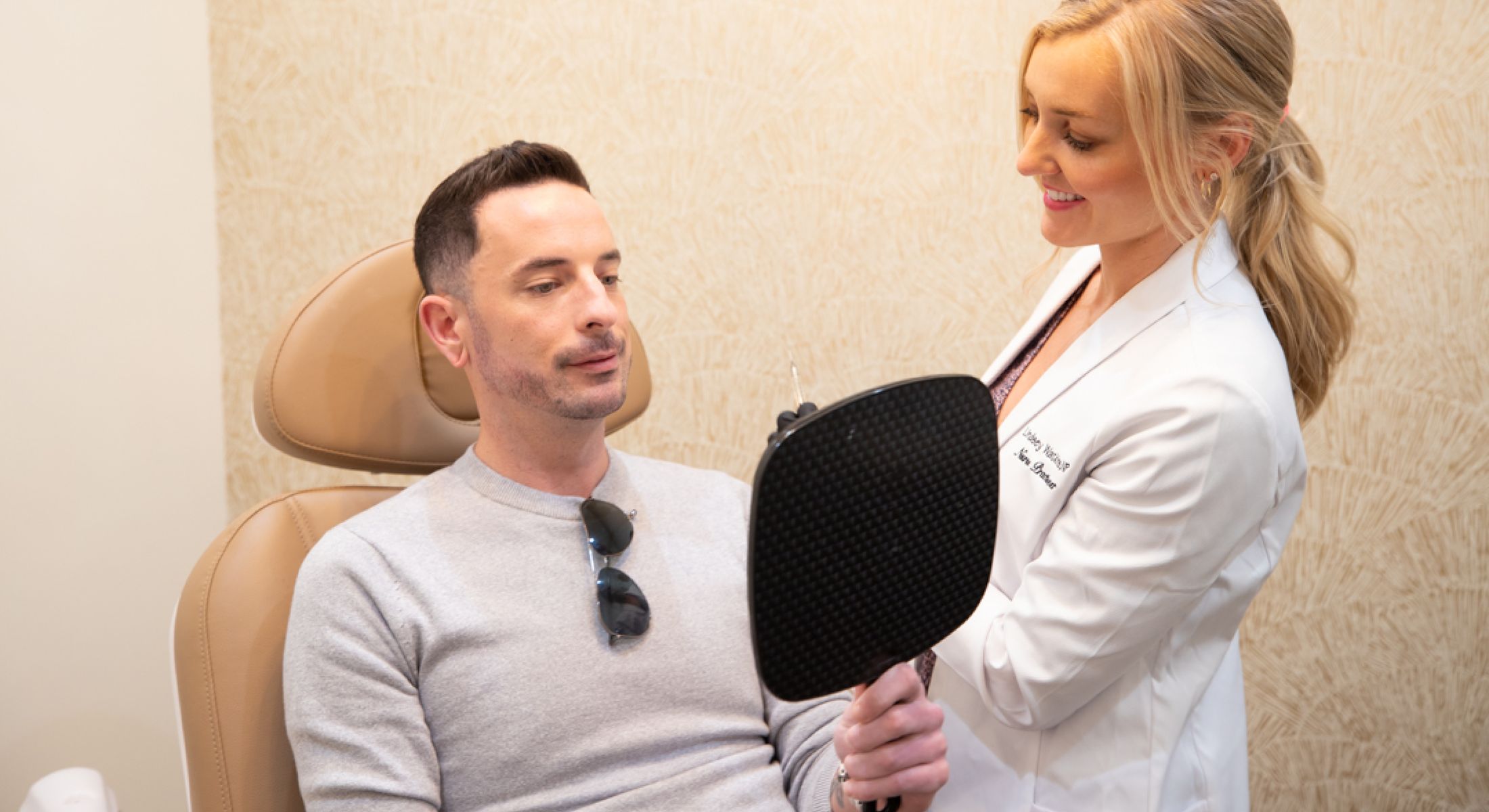
Your visit begins with a scalp evaluation and a conversation about your goals. We look at areas of thinning, examine the condition of the scalp, and decide whether Mission Viejo hair restoration is the right procedure or whether other options should be part of the plan. Treatment is done in the office, and most visits are relatively quick.
During the procedure, patients feel pressure, pinching, or mild discomfort depending on the method used. Most describe it as manageable. Recovery is usually easy, and most people can go back to normal routines the same day.

Easy Recovery, Gradual Change
Recovery is minimal for most hair restoration patients. You may notice mild tenderness, redness, or sensitivity across the head or treatment area for a short time. These effects are usually temporary. While rare side effects can happen with any procedure, most patients do well with simple aftercare and a little patience.
Growth Takes Time
This is not a same-day result treatment. Hair grows slowly, and improvement tends to show up gradually. Some patients notice less shedding first. Visible change in fullness or hair density often takes a few months. Results vary based on the cause of thinning, the health of the follicles, and whether the treatment plan includes maintenance or a combination approach.
Let’s Talk Timing
Most patients need a series of treatments rather than a one-time visit. The exact number depends on the severity of thinning, how long it has been going on, and how your scalp responds. Maintenance is commonly recommended to help restore support for ongoing growth and help patients regain density over time.
Hair Restoration vs. Other Options
Hair Restoration is a nonsurgical option designed to support existing follicles and improve scalp health. That makes it a very different fit from surgical procedures, which are used to move hair rather than support the follicles already in place. The right choice depends on how advanced the hair loss is and whether follicles are still active.
Hair Restoration is designed to support weakened but still-active follicles and encourage healthier growth over time. A hair transplant is a surgical procedure that moves follicles from one area of the scalp to another. In general, Hair Restoration is a better fit for early to moderate thinning, while a transplant makes more sense for more advanced hair loss or areas where hair is no longer growing.
Follicular unit extraction, or FUE, is one specific type of hair transplant. It involves removing individual follicles from a donor area and placing them into thinning areas. Hair Restoration does not move follicles. It works by improving the condition of the scalp and supporting the follicles you already have, which makes it a less invasive option with less downtime.
Hair thinning is often easier to treat earlier, while follicles are still active and responsive. Waiting too long can allow more loss to progress, which may limit what nonsurgical treatment can realistically achieve. For many patients, early Hair Restoration is a way to be proactive before surgery is even part of the conversation.
A Plan Built Around You
If you are noticing thinning, more shedding, or a changing hairline, this is a good time to have it evaluated. A consultation at soul&beautyMEDx in Mission Viejo can help determine what may be driving the change and which treatment options make sense for your scalp, your goals, and your long-term hair health.
Yes. Women with diffuse thinning, widening through the part, or hormonal shedding may be good candidates.
No. It can be appropriate for both men and women, depending on the cause of hair loss.
Cost can vary based on the treatment plan, number of sessions, and whether a combination approach is recommended.
Not always. It may help some patients avoid or delay surgery, but advanced loss may still require transplant evaluation.
Not immediately. These treatments work gradually, with more noticeable improvement over time.